
Copyright Claims on YouTube: YouTube gives creators a powerful way to reach audiences, grow channels, and build long-term income. At the same time, it also operates under strict copyright rules. Many creators upload videos with good intentions but still receive claims. In some cases, they use background music without understanding the license. In other cases, they include short clips, TV scenes, game footage, or reused visuals and assume it is acceptable. That assumption often leads to trouble.
If we want to avoid problems, we need to understand one basic point from the start: a copyright claim is not always the same as a copyright strike. A claim usually happens when YouTube’s Content ID system detects copyrighted material in our video. The owner may then monetize the video, block it, or track it. A strike is more serious and usually comes from a formal takedown request. Both situations can affect our channel, but claims are far more common for most creators.
In this guide, we will explain how copyright claims on YouTube work, why they happen, and how we can reduce the risk before publishing. We will also cover music, footage, licensing, fair use, reaction content, live streams, editing tricks, and practical checks that can save us from future issues.
What Are Copyright Claims on YouTube?
Copyright protects original creative work. This includes music, films, TV clips, sound recordings, images, videos, and more. When someone else owns that content, we usually need permission or a valid legal reason to use it.
On YouTube, copyright claims often happen through an automated system called Content ID. This system compares uploaded videos against a database of copyrighted content submitted by rights holders. If it finds a match, a claim may appear on the video.
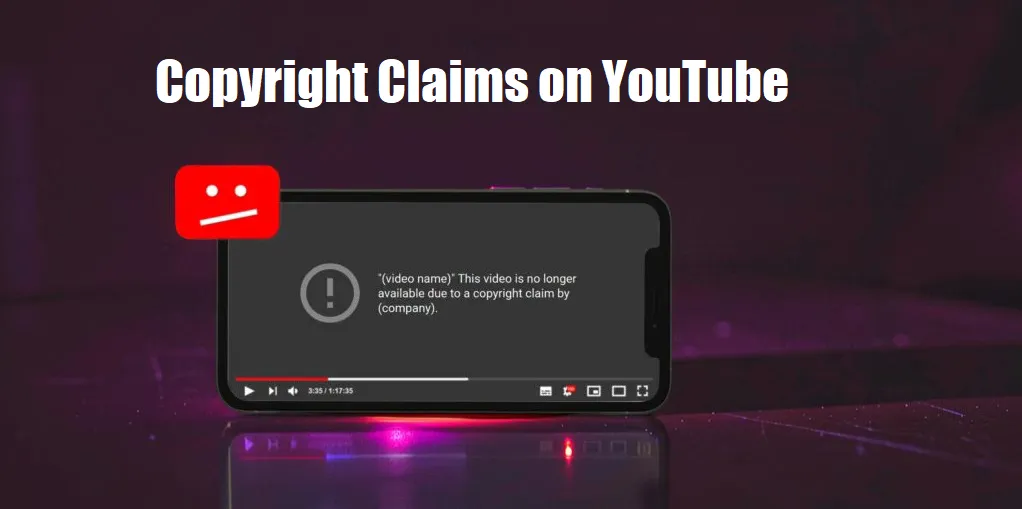
A claim does not always mean we copied an entire song or full movie scene. Even short segments can trigger detection. For example, a few seconds of background music playing in a shop, a TV in the background, an intro beat we downloaded from an unknown source, or a reused clip from another creator can all lead to claims.
Copyright Claim vs Copyright Strike
This difference is very important.
| Issue | What It Means | Common Result |
|---|---|---|
| Copyright Claim | Content ID detected copyrighted material | Monetization redirected, tracking, or blocking |
| Copyright Strike | Rights holder submitted a legal takedown request | Video removal and channel risk |
If we understand this difference early, we can make better choices and avoid unnecessary panic.
Why Do Copyright Claims Happen?
Most copyright claims happen because creators assume that one of the following ideas is true:
- “I gave credit, so it is okay.”
- “I used only a few seconds.”
- “It is for educational purpose, so it is allowed.”
- “I found it on Google, so it is free.”
- “The music said no copyright.”
- “I edited it, so it became mine.”
- “Everyone else is using it too.”
These ideas are often misleading. Credit does not replace permission. Short use is not automatically safe. Editing content does not remove the original owner’s rights. And “no copyright” labels on random websites or social media posts are often unreliable.
The Safest Way to Avoid Copyright Claims on YouTube
The safest rule is simple: use only content that we created ourselves, content we licensed properly, or content that is clearly free to use under valid terms.
That rule may sound strict, but it saves time, protects monetization, and helps us build a stronger channel in the long run.
How to Avoid Copyright Claims on YouTube Music
Music is one of the biggest reasons creators receive copyright claims on YouTube. Even when the video is original, the soundtrack often causes problems.
1. Use YouTube Audio Library
One of the safest options is YouTube’s own Audio Library. It offers music and sound effects that creators can use under the listed terms. Some tracks require attribution, while others do not.
Before using any track, we should still check:
- whether attribution is required
- whether use is allowed for monetized videos
2. Buy Proper Music Licenses
If we want better music choices, we can use licensed music from trusted platforms. But we must read the license carefully. Not every paid track gives unlimited YouTube rights. Some licenses cover one channel only. Others exclude ads, client work, or commercial use.
We should keep:
- the invoice
- the license file
- the download proof
- the track title and creator name
These records can help if a dispute appears later.
3. Avoid Popular Commercial Songs
Using famous songs in vlogs, shorts, intros, ads, or commentary videos is one of the fastest ways to trigger a claim. Even if the clip is short, the system may still catch it.
Popular music is rarely safe unless we have direct permission or YouTube specifically provides that use option in a valid format.
4. Watch for Incidental Background Music
Many creators forget this point. If we record in a market, restaurant, gym, wedding hall, or car, background music may be captured by the microphone. That alone can trigger a claim.
To reduce risk, we should:
- record in quieter environments when possible
- lower ambient sound during editing
- replace noisy background sound with clean audio
- use voice isolation tools if needed
How to Avoid Copyright Claims on Video Footage
Music is not the only issue. Video clips, images, TV footage, movie scenes, trailers, sports highlights, and screen recordings can also lead to copyright claims on YouTube.
1. Create Original Visual Content
The most reliable choice is to use our own footage, our own photos, our own graphics, and our own screen recordings. Original content gives us stronger ownership and fewer disputes.
2. Use Licensed Stock Footage
Stock footage can be helpful, but only if we get it from a trusted source and read the terms. Some stock sites allow YouTube use. Others limit redistribution, paid ads, or template-based use.
Before publishing, we should confirm:
- commercial use permission
- YouTube monetization permission
- need for attribution
- restrictions on resale or channel branding use
3. Do Not Reupload Other People’s Videos
This should be obvious, but many channels still do it. Downloading a clip from another YouTube video, Facebook reel, Instagram post, movie trailer, or news segment and uploading it again is risky. Even heavy editing does not guarantee safety.
Adding:
- borders
- zoom
- color effects
- text overlays
- slow motion
- cropping
does not automatically remove copyright issues.
4. Be Careful With Clips in Reaction Videos
Reaction videos, commentary, and criticism can sometimes be more legally defensible than simple reposting. But that does not mean they are automatically safe.
If we make reaction content, we should:
- add substantial commentary
- keep the clip portions limited
- transform the content with analysis, criticism, or discussion
- avoid uploading nearly the full original work
- ensure our voice, opinion, and purpose clearly dominate the video
Does Fair Use Protect Us?
Fair use is one of the most misunderstood areas on YouTube. Many creators think saying “no copyright intended” or “for educational purposes only” will protect them. It usually does not.
Fair use is a legal doctrine, not a magic sentence. It depends on context. Courts often consider factors such as:
- purpose and character of the use
- nature of the original work
- amount used
- effect on the market for the original
That means there is no guaranteed shortcut. A video can still get claimed even if we believe it is fair use. Content ID may not understand our legal argument. It may still detect the material and apply a claim automatically.
Practical View of Fair Use
We should treat fair use as a possible legal defense, not a publishing strategy. If our business model depends on avoiding claims, fair use alone is not the safest base.
Common High-Risk Content Types
Some video categories are more likely to attract copyright claims than others.
| Content Type | Risk Level | Why |
|---|---|---|
| Popular songs in background | Very High | Easily detected by Content ID |
| Movie or TV clips | Very High | Strong rights management |
| Sports highlights | Very High | Broadcast rights are tightly controlled |
| Anime scenes | Very High | Frequent automated detection |
| Reuploaded TikTok or Reels clips | High | Original owners may claim or report |
| Stock footage without verified license | High | License confusion is common |
| Game footage | Medium | Depends on publisher rules |
| Original vlog footage | Low | Usually safe unless background content appears |
| YouTube Audio Library tracks | Low | Safer when terms are followed |
How to Check Content Before Uploading?
Prevention is much better than dispute. We should build a review process before pressing publish.
A Simple Pre-Publish Copyright Checklist
Before uploading, ask:
- Did we create this music, footage, image, or clip ourselves?
- If not, do we have a valid license?
- Do we have proof of permission?
- Does the license allow YouTube and monetization?
- Is any background music playing in our recording?
- Did we reuse another creator’s content?
- Are we relying only on “credit” instead of permission?
- Are we assuming fair use without strong transformation?
- Can we replace risky parts with safer alternatives?
If any answer seems uncertain, it is better to fix the issue before upload.
How to Avoid Copyright Claims on YouTube Shorts
Shorts are not exempt from copyright rules. In fact, short videos often include trending music, memes, movie scenes, and reused clips, so they can be risky.
To reduce problems in Shorts:
- use audio made available through YouTube’s own Shorts tools where permitted
- avoid downloading trending songs from outside sources
- keep visuals original
- add strong original value through editing, voiceover, or demonstration
- avoid copying viral content frame by frame
Short length does not equal legal safety.
How Live Streams Can Trigger Copyright Claims on YouTube?
Live streams create special risks because background audio or accidental content can appear in real time. A TV playing in the room, music in the venue, game lobby music, or guest audio can all cause trouble.
For safer live streams, we should:
- test background sound before going live
- mute music in games where possible
- avoid public spaces with loud songs
- use safe, licensed stream music only
- review archived live streams after the stream ends
What to Do If We Still Get Copyright Claims on YouTube?
Even careful creators sometimes get claims. When that happens, we should stay calm and check the details first.
Step 1: Read the Claim Carefully
Look at:
- what part of the video was claimed
- who claimed it
- what policy was applied
- whether the video is blocked or only monetized by the owner
Step 2: Confirm Whether the Claim Is Valid
Ask:
- Did we actually use that content?
- Do we have a license?
- Is the claim caused by background noise?
- Is the content from a royalty-free source?
- Did we keep records?
Step 3: Choose the Right Action
Depending on the case, we may:
- leave the claim if it does not matter to us
- trim out the claimed section
- replace the music
- mute the affected audio
- dispute the claim if we have strong grounds
We should not dispute blindly. False or weak disputes can escalate problems.
Also read: How to create YouTube Channel on Mobile Device or Computer?
Best Practices for Long-Term Channel Safety
If we want stable growth, we should think beyond one upload. A safe channel usually follows a system.
Build a Copyright-Safe Workflow
Content Planning
Use original ideas, scripts, and visuals from the beginning.
Asset Management
Store licenses, receipts, download links, and creator details in one folder.
Editing Discipline
Avoid adding random music, clips, memes, or screenshots just because they look attractive.
Final Review
Check every non-original element before upload.
Documentation
Keep proof of permission in case claims appear months later.
This workflow may seem extra careful at first, but it saves a lot of time over the long term.
Myths That Often Mislead Creators
Let us clear up some common myths.
“If I Mention the Owner, It Is Safe”
Not necessarily. Credit is good practice, but it does not replace permission.
“If I Use Less Than 10 Seconds, It Is Allowed”
There is no universal safe number of seconds.
“If I Do Not Monetize, I Cannot Get Claimed”
Wrong. Claims can happen on non-monetized videos too.
“If I Edit the Clip, It Becomes Fair Use”
Editing alone is not enough.
“If It Is on the Internet, It Is Free to Use”
Public availability does not mean free use.
A Smart Content Strategy for New Creators
New YouTubers often want fast growth, so they use trending songs, reused clips, or famous scenes. That can bring short-term attention, but it also creates future risk. A better strategy is to build around original and safe content.
Good options include:
- talking-head videos
- tutorials
- screen recordings
- original explainer videos
- product reviews with our own footage
- educational videos using self-made graphics
- commentary with limited, clearly transformed references
This approach helps us grow without depending on risky assets.
Final Tips to Avoid Copyright Claims on YouTube
Here are the most practical rules to remember:
- Create as much original content as possible.
- Use licensed music and keep proof.
- Avoid famous songs and commercial tracks.
- Be careful with background audio in public places.
- Do not assume short clips are safe.
- Do not rely on “no copyright intended” statements.
- Treat fair use carefully and realistically.
- Review every asset before uploading.
- Save receipts, licenses, and permissions.
- Build a repeatable workflow for every video.
Conclusion
Learning how to avoid copyright claims on YouTube is not only about following one rule. It is about developing a safer content process from start to finish. When we understand how copyright works, choose our assets carefully, verify licenses, and avoid risky assumptions, we protect both our videos and our channel.
The main lesson is simple: the more original our content is, the safer we usually are. When we need outside music, visuals, or clips, we should use only trusted sources and clear permissions. If we stay disciplined, we can reduce disputes, protect monetization, and build a stronger YouTube presence with confidence.
In the end, creators who respect copyright usually face fewer interruptions, fewer surprises, and better long-term growth. That is why prevention is always better than cleanup.
Leave a Reply